
Best practice guidance on data and equipment installation design for seabird collision monitoring studies at offshore wind farms
Delivered by the Prevalence of Seabird Species and Collision Events in Offshore Wind Farms (PrediCtOr) project.
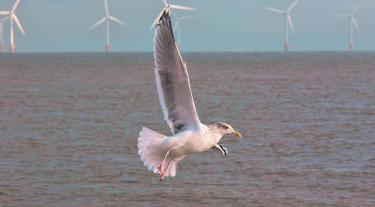
As offshore wind expands to meet decarbonisation targets, improved post‑construction monitoring is needed to strengthen the evidence base underpinning seabird collision risk modelling and environmental assessment. The PrediCtOr project brings together offshore wind developers, nature conservation bodies, monitoring specialists, scientists, and regulators to improve how collision monitoring is designed, delivered and interpreted.
As part of the project, two best practice guidance documents have been developed, addressing both data and installation design considerations for seabird collision monitoring offshore. Together, they link practical installation design with data expectations, supporting more consistent planning, delivery and interpretation of collision monitoring.
Data best practice guidance
This guidance sets out best practice recommendations for the collection, management, processing, transmission, storage and responsible disclosure of data from post‑construction seabird collision monitoring studies.
The focus is on improving data quality, consistency and comparability across projects, sites and jurisdictions, while recognising offshore feasibility constraints and the need to manage commercially sensitive information. The guidance is informed by a review of existing and planned monitoring studies, alongside structured engagement with offshore wind developers, monitoring equipment suppliers, and regulatory and environmental authorities.
Key topics covered include:
- Priority monitoring parameters relevant to collision monitoring, with clear definitions to support consistent interpretation
- Practical requirements for offshore data acquisition, including monitoring duration, system capabilities and equipment placement considerations
- Recommendations for raw and processed data formats, metadata, synchronisation, quality assurance and version control to support reproducibility and re‑analysis
- Approaches to data transmission, storage and access that reflect offshore and IT/OT constraints
- Proportionate management of confidentiality and commercial sensitivities, including data‑sharing arrangements
The guidance is intended to be used alongside project‑specific monitoring plans and regulatory requirements, and to be applied flexibly across different project contexts and jurisdictions.
ORJIP PrediCtOr Work Package 4
Design best practice guidance
This guidance provides best practice recommendations for the installation of seabird collision monitoring equipment at offshore wind farms.
It addresses the engineering, logistical and health and safety challenges associated with installing monitoring systems offshore, drawing on stakeholder engagement, technical review of existing practices, and installation design case studies.
Key topics covered include:
- Overview of commonly used monitoring technologies and current offshore installation practices
- Installation requirements and specifications, including power supply, data connectivity, equipment protection, logistics, and health and safety
- Considerations for monitoring system retrofitting at operational wind farms and for integrated designs developed during early project stages
- Representative installation design case studies illustrating camera and radar mounting solutions
- Recommendations across different monitoring stages, from early design and procurement through to installation, operation and maintenance
The guidance emphasises the importance of early planning and coordination between engineering, consenting and operational teams, while recognising that monitoring requirements are often confirmed late in the development process and may require flexible design approaches.
ORJIP PrediCtOr Work Package 5
PrediCtOr project information
The PrediCtOr project was initiated and set up within the Offshore Renewables Joint Industry Programme (ORJIP) for Offshore Wind. The project is jointly delivered by the Carbon Trust, British Trust for Ornithology (BTO), and Waardenburg Ecology. The delivery of the data and installation design best practice guidance documents was additionally supported by DMP Statistical Solutions and Ramboll.
PrediCtOr project partners: Equinor, Ørsted, Rijkswaterstaat, RWE, Scottish Government (Offshore Wind Directorate and Marine Directorate), ScottishPower Renewables, Shell, and TotalEnergies.
The project forms part of the Offshore Wind Evidence and Change Programme (OWEC), led by The Crown Estate, in partnership with the Department for Energy Security and Net Zero and the Department for Environment, Food and Rural Affairs.