
Methodology update
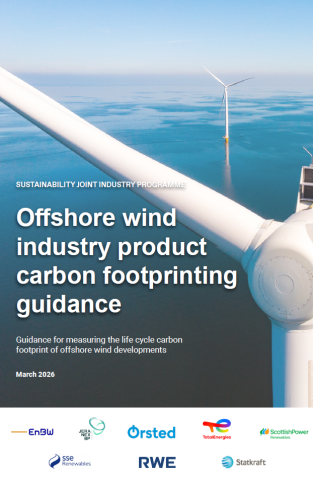
In March 2026, the methodology has been revised to improve the guidance’s clarity and align it with current industry best practices. Use cases are given on how to apply the PCF methodology, and updated templates for reporting and disclosure and improved guidance for assessing data quality, sensitivity and uncertainty are provided. In June 2026, the Offshore Wind Supplier Data Guidance was published as a companion to the primary PCF guidance, translating the data requirements into clear logical steps for suppliers to act on.
Case studies
Real-world examples of the SUSJIP methodology in action
Developer-partner position statement
In March 2026, SUSJIP partners published a position paper advocating for a unified and harmonised methodology to calculate carbon footprints.
Read the Developer-partner position statement
Guidance resources
Offshore wind PCF guidance - technical summary
Offshore wind industry PCF guidance FAQs
Webinar
The Carbon Trust, together with several SUSJIP partners, hosted a webinar on 3 October 2024 dedicated to explaining the methodology, the key takeaways, what it means for the industry, and how it can be used. This webinar also offered attendees the opportunity to engage with industry leaders on the topic of carbon footprinting.
Supplier data guidance and a shared supplier ambition statement
To improve carbon emission data and monitoring practices by addressing common challenges with developers and suppliers in data gathering. A supplier guidance annex has been added to the carbon footprint methodology.
Additionally, a shared ambition statement has been developed in collaboration with the SUSJIP partners. This is a shared, non-binding ambition designed to provide key suppliers with a clear and consistent signal on developers’ expectations. It sets out the minimum expectations for 2028, and the outcomes developers would like suppliers to work towards from 2030 onwards, with the longer-term ambition of enabling supplier carbon data to be used to inform procurement decisions and drive decarbonisation across the supply chain.
Offshore wind footprinting tool
A free offshore wind PCF calculator tool has been developed and is available for users of the Offshore Wind Industry Product Carbon Footprinting (PCF) Guidance. The tool can be optionally used when applying the guidance to help calculate the emissions of OSW developments.
Tool training videos
Part 1: Downloading and navigating the tool
Part 2: Project summary and information tabs
Part 3: Emissions factor database